
Transportation & Handling
Castors, conveyor components, hoists, lifting gear, trolleys and transport racks — the equipment that moves material inside a factory. Selected by load rating and duty cycle, and both are more often underestimated than overestimated.
Load rating on castors is per castor, and the arithmetic that follows is where most failures start. A four-castor trolley does not share load evenly: on an uneven floor three castors carry it, so the working rating should be taken as the total load divided by three, not four. Then the floor surface decides the tread — hard nylon rolls easily on smooth concrete but transmits every joint, while polyurethane absorbs shock and protects a finished floor at the cost of slightly higher rolling resistance.
Lifting equipment carries a duty classification, and for hoists the FEM classes describe how much of the day the unit actually runs. A hoist rated for occasional use will fail early on a production line however generous its load rating, because the limiting factor is thermal and mechanical duty rather than capacity.
We publish load rating, wheel diameter, tread material and mounting for castors, and duty class for lifting gear.
Lines in this category
- Swivel and fixed castors
- Heavy-duty and braked castors
- Conveyor rollers and idlers
- Belt and chain conveyor components
- Chain hoists and lever hoists
- Webbing slings and shackles
- Trolleys and platform trucks
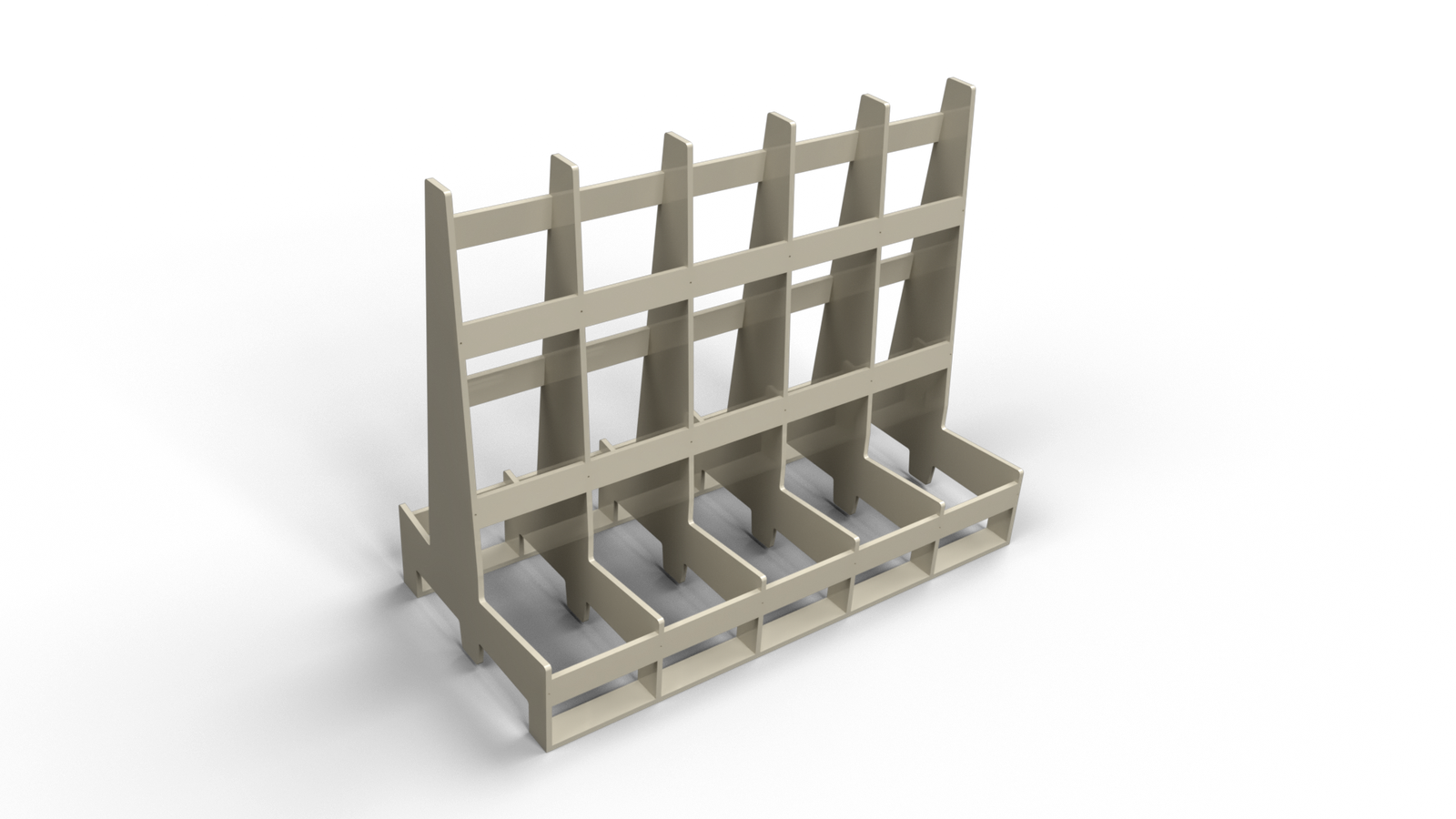
- Transport and stillage racks
- Drum and barrel handling
Products
How to choose
Divide the total load by three, not four, when sizing castors — an uneven floor puts the weight on three of them. Then wheel diameter against the worst obstacle the trolley must cross; a larger wheel climbs a threshold that stops a small one dead. Then tread material against the floor and the noise you can tolerate. For lifting gear, start from the duty class rather than the capacity: how many lifts per hour, over how much of the shift, decides the class, and a class-mismatched hoist fails on duty long before it fails on load.
Frequently asked
Why divide the load by three instead of four?
Because on any floor that is not perfectly flat, one castor lifts and three carry the load. Sizing on a quarter of the total gives a trolley that is fine on a test floor and overloads in service. Divide by three and you have a working margin.
Which tread for a painted or epoxy workshop floor?
Polyurethane or soft rubber. Hard nylon and steel treads mark and eventually break up an epoxy surface, and the repair costs far more than the castors. Polyurethane also runs much quieter.
How do I choose a hoist duty class?
From how much it works, not what it lifts. Count lifts per hour and the proportion of the shift the hoist is running; that gives the FEM class. A capacity-correct hoist in the wrong duty class fails early and the warranty will say so.